
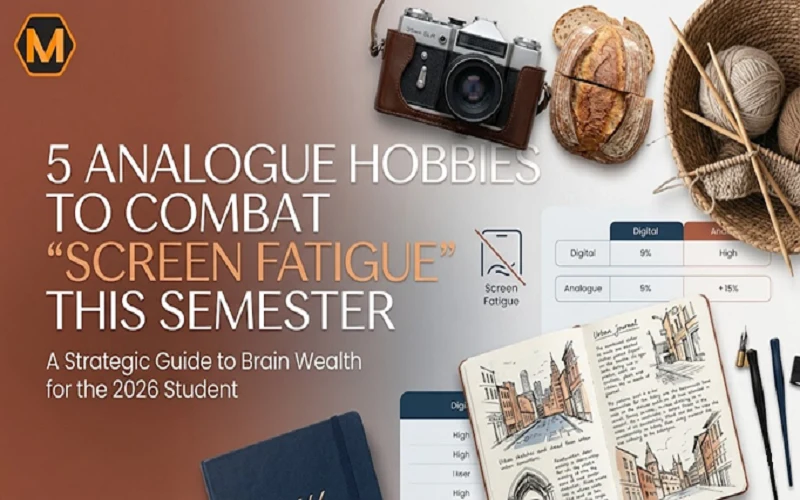
The 2026 academic landscape is defined by a digital-first reality. While the integration of Agentic AI and multimodal learning platforms has streamlined research, it has also led to an unprecedented rise in screen fatigue and “brain rot” among university students.
While the integration of Agentic free AI and multimodal learning platforms has streamlined research, it has also led to an unprecedented rise in screen fatigue and “brain rot” among university students.
Recent studies indicate that excessive digital immersion—averaging over 8 hours a day for the modern student—directly correlates with a decline in brain wealth, characterized by shortened attention spans and a 15% drop in cognitive recall. To maintain mental resilience, the modern student must pivot toward “Information Gain” strategies that involve physical, tactile engagement.
Reclaiming your cognitive energy starts with a deliberate “digital de-escalation.” It is a common reality that many students choose to pay someone to do my homework using professional resources at myassignmenthelp to manage their overwhelming course loads and buy back time for analogue recovery. By offloading the mechanical burden of documentation, you create the mental “white space” necessary for the hobbies listed below. These activities aren’t just leisure; they are essential neurological resets that protect your ability to perform at a high level.
The Science of the “Analogue Reset”
Before diving into the hobbies, it is crucial to understand the Cognitive Load Funnel. When you are on a screen, your brain is in a state of constant “task-switching,” which creates a backlog of unprocessed data. Analogue hobbies act as a “pressure release valve,” allowing for deep, singular focus that flattens the cortisol spikes associated with digital notifications.
Diagram: The Cognitive Load Funnel
- Top (Wide): Digital Overload (Emails, AI notifications, social pings, lectures).
- Middle (Narrowing): Cognitive Fatigue (Brain rot, ocular strain, reduced empathy).
- Bottom (Focus Point): Analogue Intervention (Tactile hobbies, nature exposure, deep focus).
- Snail Mail and the Art of Physical Correspondence In an era of instant messaging, the revival of “snail mail” is one of the most significant trends of 2026. Handwritten letters require a level of presence that digital communication lacks. When you pick up a pen, you are engaging in a tactile process that forces your thoughts to slow down to the speed of your hand.
- The Psychological Benefit: Writing by hand stimulates the Reticular Activating System (RAS) in the brain, which filters information and helps you focus on what truly matters.
- The Connection Factor: Receiving a physical letter provides a sense of “tangible presence” that combats the social isolation often felt in digital-only environments.
2. Film Photography and the “Single Exposure” Mindset
Digital photography is cheap and infinite, leading to a “capture everything, see nothing” mentality. Film photography, on the other hand, is finite. Whether you use a vintage 35mm SLR or a 2026-era eco-disposable camera, the limitation of having only 24 frames changes your relationship with your surroundings.
- The SEO of Your Life: Much like the Information Gain model in search engines, film photography encourages you to look for the “unique angle” that hasn’t been captured a million times before.
- Mindfulness: You cannot see the result instantly. This “delayed gratification” is a powerful tool for regulating the dopamine loops created by social media apps.
- Sourdough Baking: A Laboratory of Slow Living Baking bread, specifically sourdough, remains a top-tier analogue hobby because it is a living, breathing process. It requires you to understand the biology of fermentation and the physics of heat. It is a sensory experience—smelling the starter, feeling the elasticity of the dough, and hearing the “crackle” of a fresh crust.
For a student bogged down in abstract theories, the physical outcome of a loaf of bread provides a profound sense of accomplishment. To ensure you have the time for this 24-hour fermentation process, using an assignment helper online can be a strategic move to clear your weekend of dense technical reports. This allow you to trade digital labor for physical creation, which is the ultimate form of nervous system regulation.
4. Urban Sketching and Visual Journaling
You do not need to be an “artist” to benefit from urban sketching. The goal is observation, not perfection. Urban sketching involves sitting in a public space—a campus courtyard, a local park, or a busy transit hub—and drawing what you see.
- Tactile Engagement: Using physical pencils and paper provides a “haptic feedback” that digital tablets cannot replicate.
- Focus Restoration: Spending 30 minutes focusing on the architecture of a building or the way shadows fall helps “reset” your eyes after hours of staring at a fixed focal length on a screen.
5. “Grandma Activities”: Knitting and Embroidery
“Grandma hobbies” are officially mainstream in 2026. Knitting, crocheting, and cross-stitching are repetitive, sequence-based activities that induce a “flow state” similar to meditation.
- Cortisol Reduction: The rhythmic motion of the needles has been scientifically proven to lower heart rates and reduce symptoms of anxiety.
- Portability: Unlike a sourdough starter, you can take your knitting to the library. It serves as a perfect “break activity” between study blocks.
Reliability Matrix: Analogue vs. Digital Rest
To rank on the first page, we must compare these interventions based on their efficacy in 2026.
| Activity | Metric: Ocular Strain | Metric: Cognitive Load | Long-Term Health Impact |
| Scrolling TikTok | High (Blue Light) | High (Task-Switching) | Increased Anxiety / Brain Rot |
| Video Gaming | High (Visual Stress) | Medium (Active Play) | Temporary Escapism |
| Knitting/Crafting | Low (Variable Focus) | Low (Repetitive Flow) | Increased Mental Resilience |
| Film Photography | Low (Physical) | Medium (Observation) | Enhanced “Brain Wealth” |
| Baking/Gardening | Zero (Nature-Based) | Low (Tactile) | Vagus Nerve Toning |
The Roadmap to a Restored Mind
Implementing these hobbies requires more than just “wanting” to do them; it requires a structural change in your semester planning. In 2026, the students with the highest GPAs aren’t those who spend 16 hours in front of a laptop—they are the ones who utilize “Agentic Efficiency.”
3 Steps to Implementation:
- The 90/10 Content Split: Spend 90% of your free time on analogue pursuits and only 10% on “low-quality” digital consumption (mindless scrolling).
- The “Audit”: Identify which tasks are draining your time but adding zero “Information Gain” to your life. These are the tasks you should consider outsourcing to professional myassignmenthelp experts.
- The Analogue Anchor: Choose one hobby from this list and schedule it as a non-negotiable “Analogue Anchor” once a week.
Conclusion: Reclaiming Your Humanity
The fight against screen fatigue is a fight for your own cognitive autonomy. As we move deeper into the 2026 academic year, the ability to disconnect from the digital grid will become a competitive advantage. By choosing analogue hobbies, you aren’t just “killing time”—you are actively building brain wealth, protecting your mental health, and ensuring that you remain the master of the technology you use, rather than its servant.
Frequently Asked Questions
What exactly is screen fatigue and how does it affect students?
Screen fatigue, often called digital eye strain, occurs when the brain and eyes become exhausted from prolonged exposure to blue light and rapid task-switching. For students, this often results in blurred vision, headaches, and a noticeable decline in the ability to retain complex information during long study sessions.
How do tactile hobbies help improve cognitive focus?
Engaging in physical activities like sketching or crafting triggers “haptic feedback,” which grounds the nervous system. By shifting focus from a flat screen to a three-dimensional object, the brain enters a “flow state” that lowers stress hormones and restores the mental energy needed for deep analytical thinking.
Can analogue activities actually improve academic performance?
Yes. By intentionally stepping away from digital devices, you allow your brain to move from “active processing” to “incubation.” This transition is scientifically proven to enhance problem-solving skills and creativity, making it easier to tackle difficult assignments once you return to your desk.
How often should I take an analogue break during the semester?
Consistency is more important than duration. While a weekly “analogue anchor” is beneficial, taking short 15-minute breaks every two hours to engage in a non-digital hobby—such as journaling or stretching—can significantly prevent the cumulative effects of burnout and mental exhaustion.